Product description
Arterial cannulas are used for direct access to the arterial bloodstream. This allows for continuous and accurate invasive monitoring of blood pressure, including mean arterial pressure (MAP). Additionally, an arterial cannula enables repeated arterial blood draws for blood gas analyses without the need to repeatedly puncture the patient.
Arterial blood gas values provide insight into oxygenation, ventilation, acid-base balance, and perfusion, among other factors, thereby supporting rapid clinical decision-making in patients requiring intensive monitoring.¹
There are risks for both healthcare professionals and patients when inserting and using arterial cannulas. For the healthcare professional, these primarily involve exposure to blood and needle stick injuries. For the patient, risks include bleeding, hematoma formation, infection, contamination, and -rarely but potentially seriously- air embolism.²
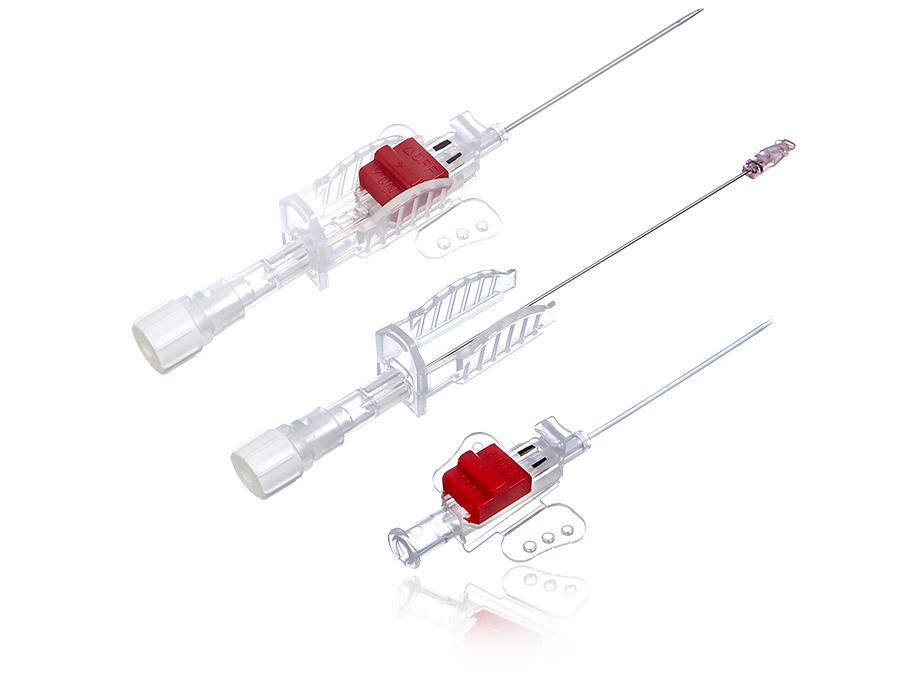
The SteriFlow™ arterial cannulas have been developed to minimize these risks as much as possible. Both a standard and a safety version are available. The integrated safety mechanism of the latter helps to protect the healthcare professional against needle stick accidents.
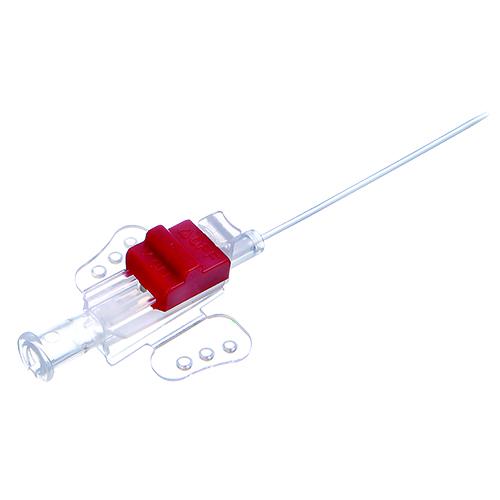
The clearly marked red ON/OFF flow switch on both versions allows for controlled opening and closing of the blood flow, thereby minimizing unwanted backflow, blood exposure, contamination, and air ingress. In doing so, the system supports a safe, controlled, and hygienic working method for arterial pressure monitoring and serial blood gas sampling.
Thanks to the use of high-quality PUR material, the cannula is biocompatible and kink-resistant. The sharp, atraumatic needle tip supports the smoothest possible insertion and contributes to the most comfortable patient experience possible.
1 Malatesha, G., Singh, N. K., & Bharija, A. (2007). Relevance of arterial blood gas analysis in clinical practice. Journal of the Association of Physicians of India, 55, 308–312
² Scheer, B., Perel, A., & Pfeiffer, U. J. (2002). Clinical review: Complications and risk factors of peripheral arterial catheters used for haemodynamic monitoring in anaesthesia and intensive care medicine. Critical Care, 6(3), 199–204.