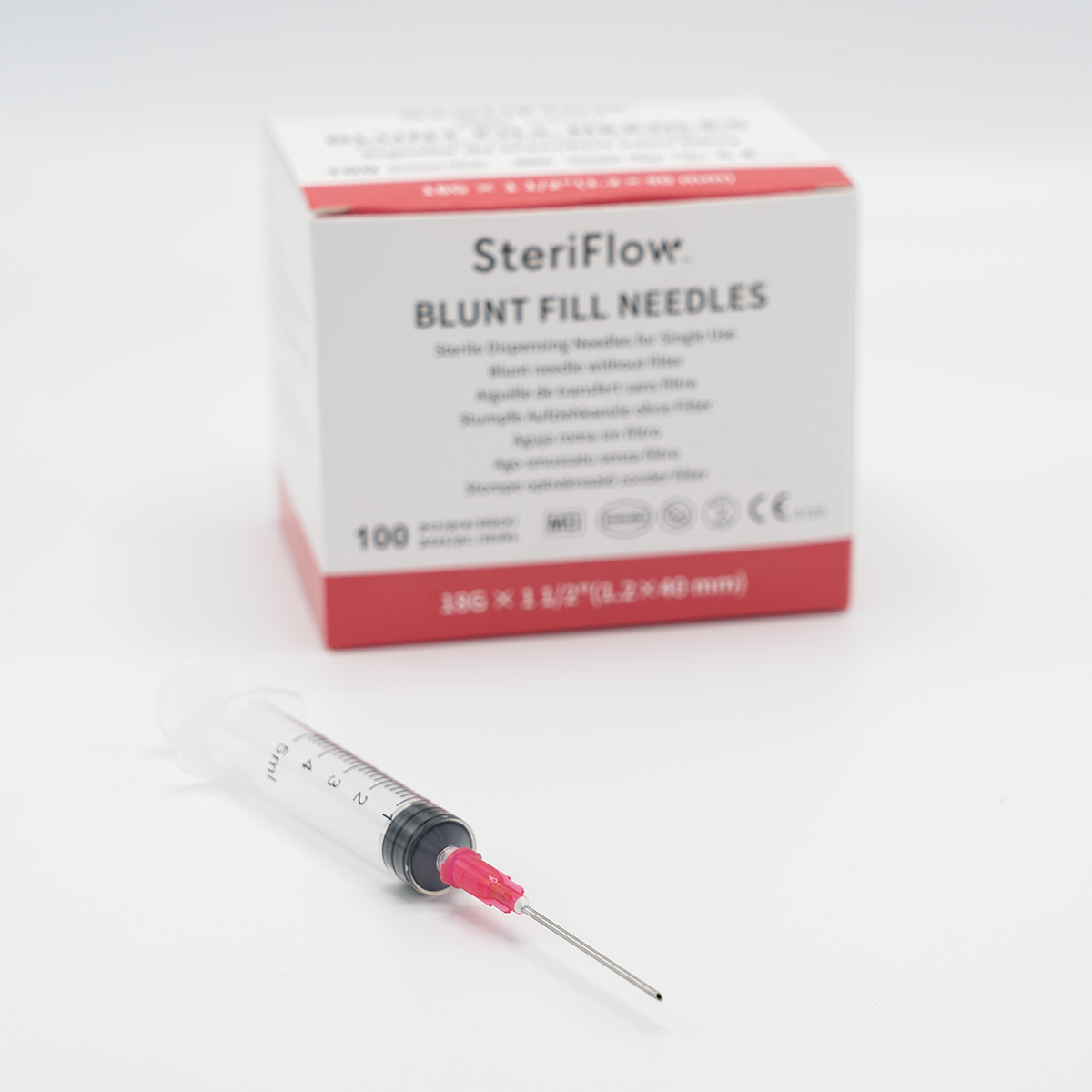
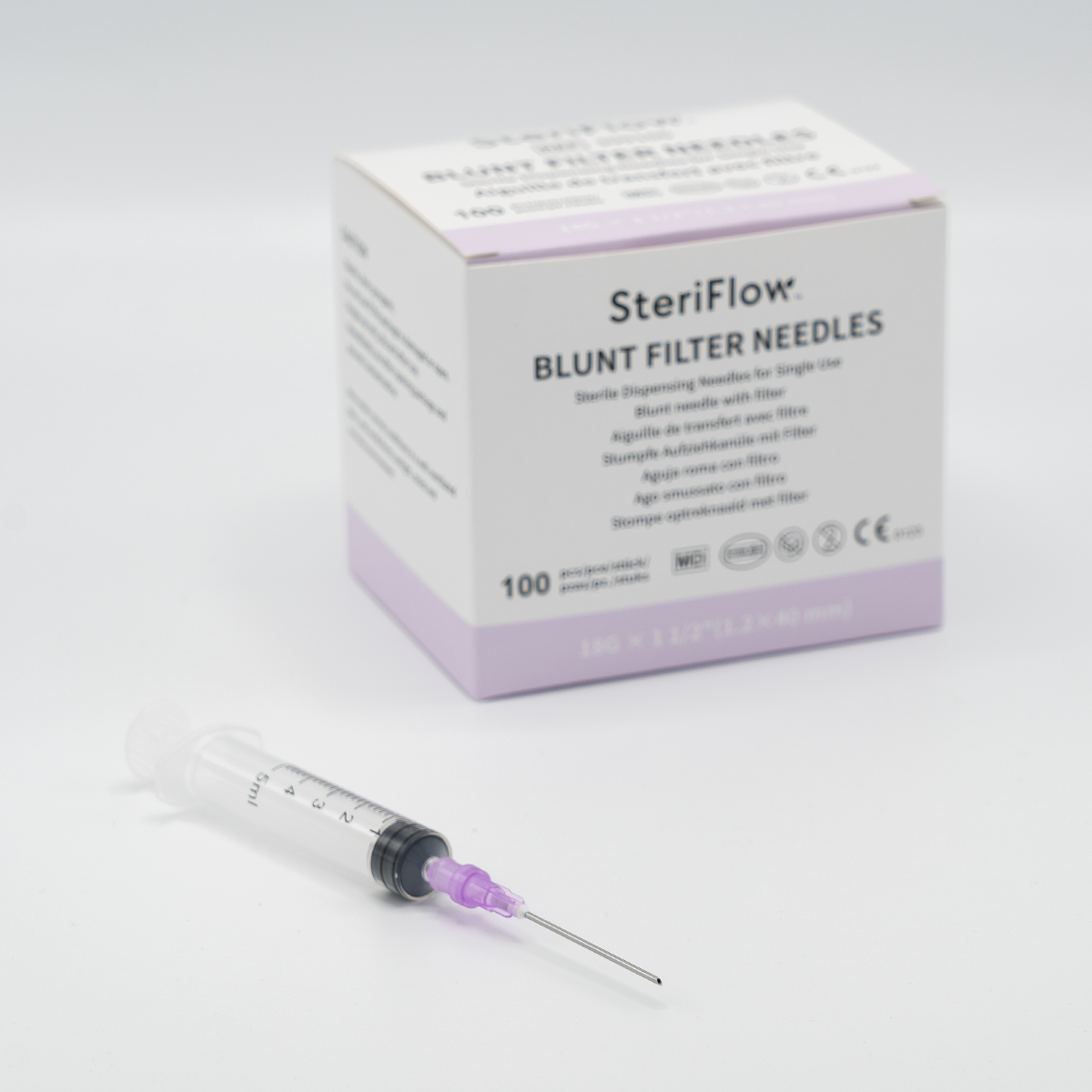
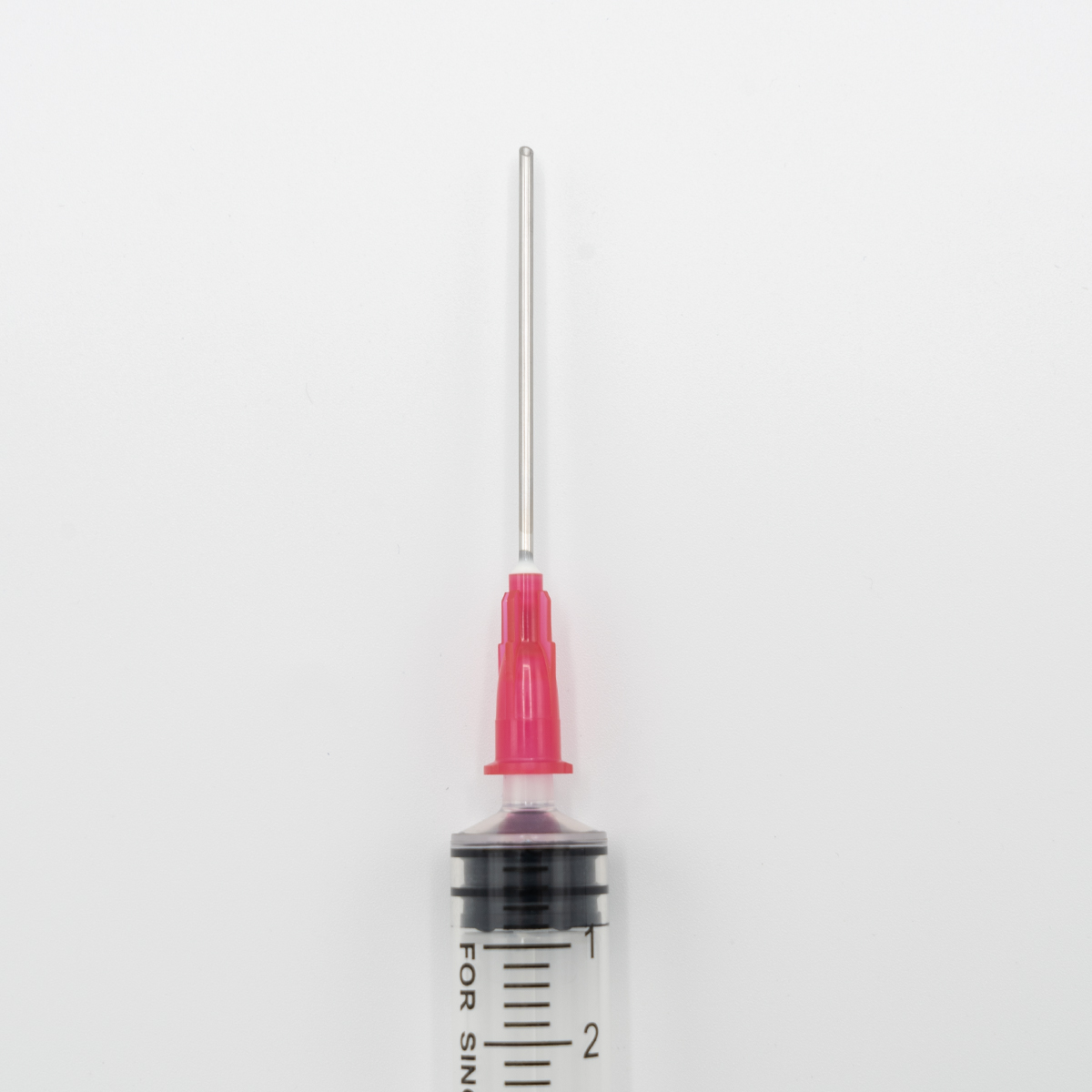
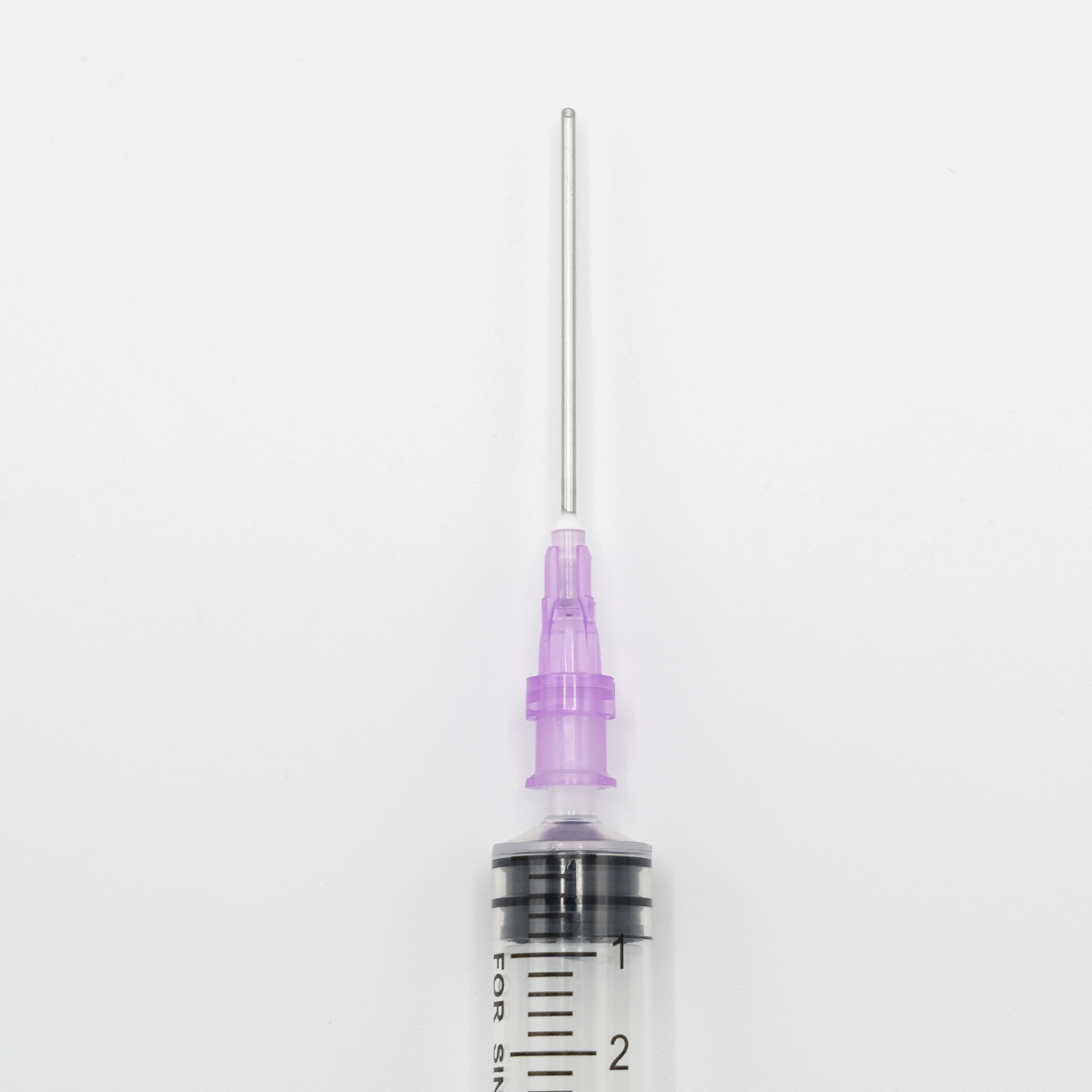
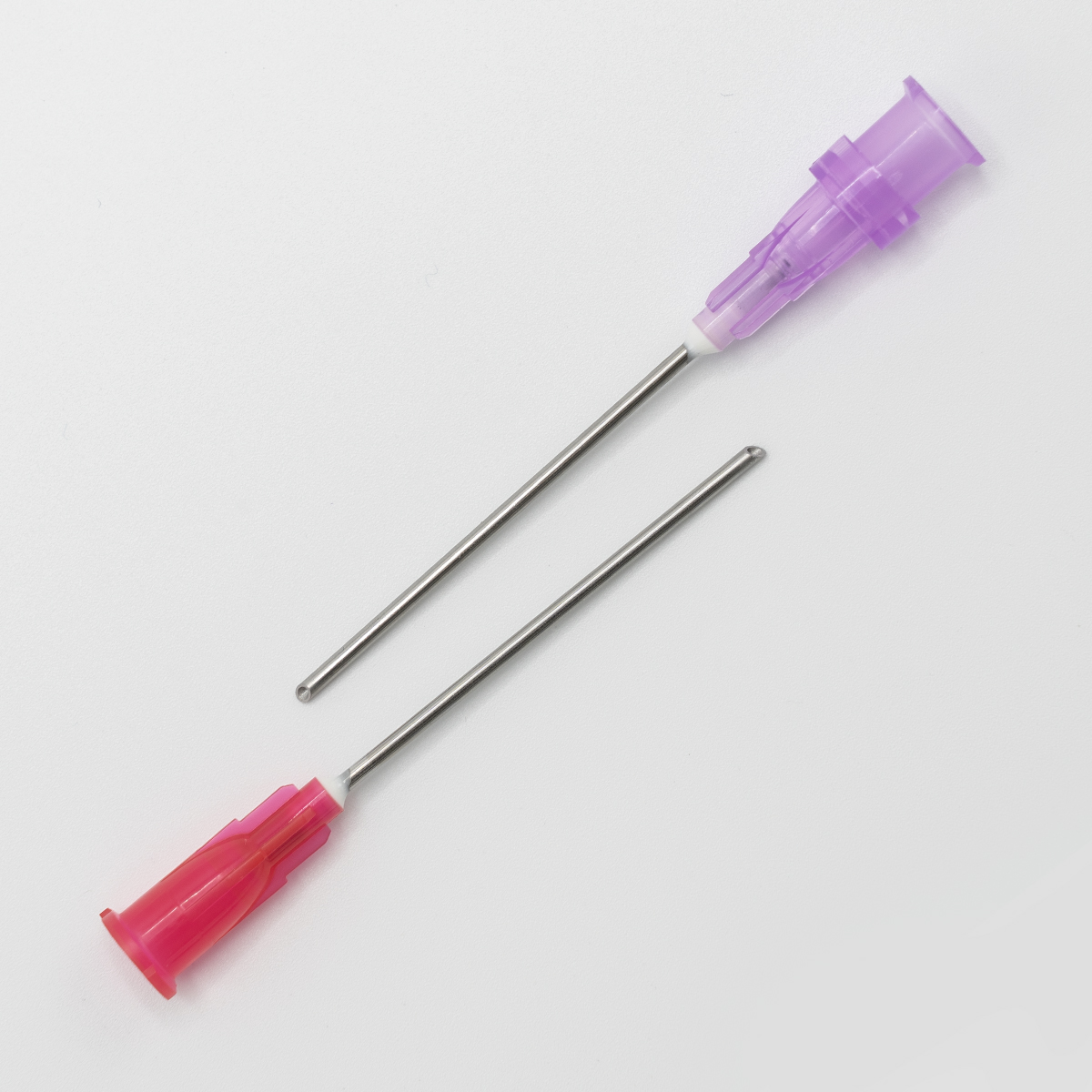
Both versions feature a blunt needle tip with an approximately 45-degree angled bevel. This design helps reduce coring of vial stoppers and lowers the risk of particles from the packaging entering the liquid during needle penetration. In addition, the blunt tip considerably reduces the risk of accidental needlestick injuries.⁶
The filtered version is equipped with a 5-micron particle filter, which filters the medication during aspiration. For safety reasons, this version is particularly recommended when drawing up medication from glass ampoules.
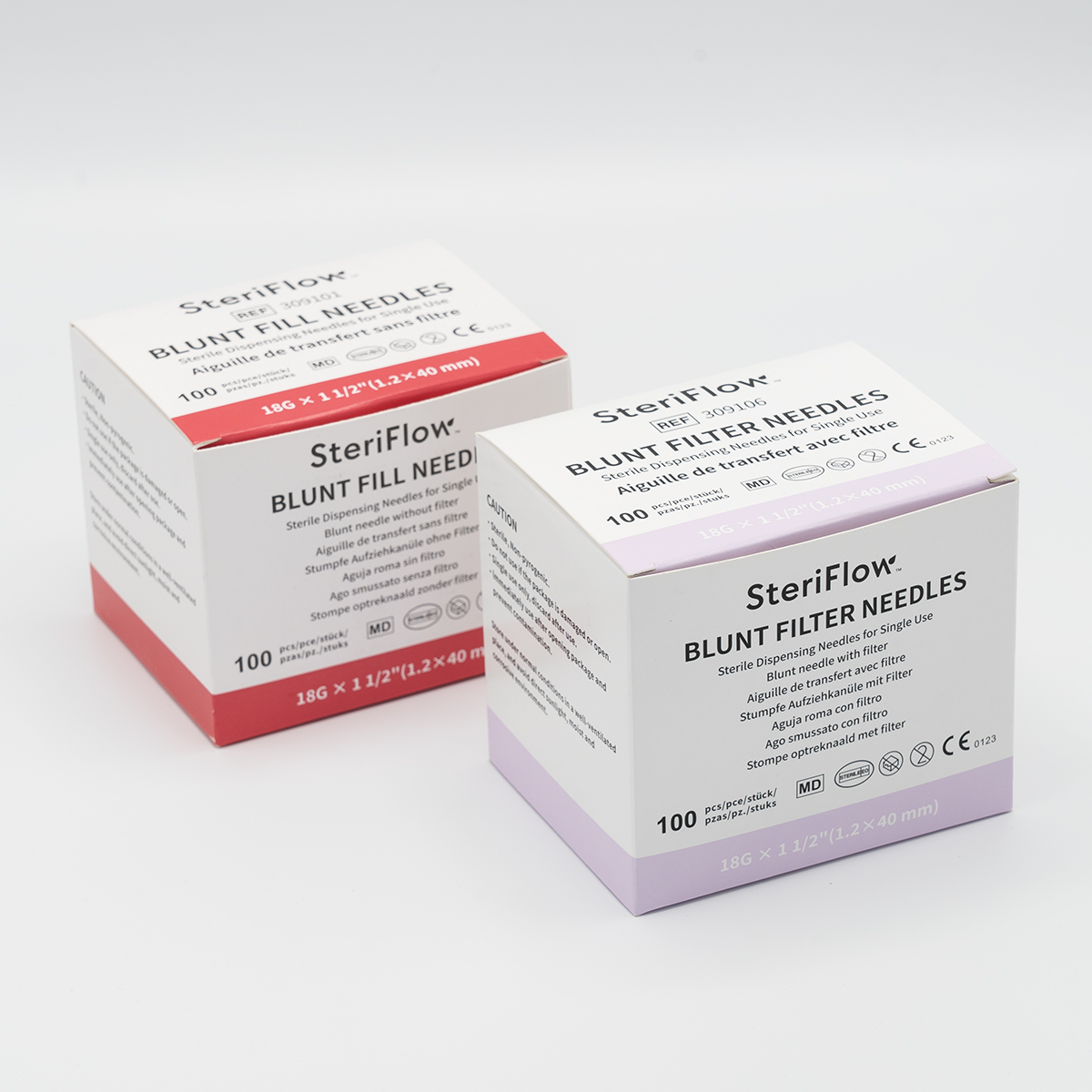
To clearly distinguish the two versions, both the needle hub and the outer packaging are color-coded: red indicates the version without filter, while purple indicates the version with filter.
Key benefits
- Compatible with all commonly used syringes
- Suitable for Luer Lock and Luer Slip connections
- 18G gauge helps maintain an efficient flow rate during aspiration
- 1½" needle length supports penetration of different septum barriers
- Blunt 40–45° angled bevel helps reduce coring of vial stoppers
- Available with or without 5 µm filter
- Ideal for use with single-dose and multi-dose vials
- Helps reduce the risk of accidental needlestick injuries among healthcare professionals
¹ Denys, M. (2023). The number of needlestick injuries in the healthcare sector increases by more than a quarter of a million in Europe. beMedTech. Published online: https://bemedtech.be/fr/actualite/communiques-de-presse/campagne-safety-pour-les-prestataires-de-soins-de-sant-et-les-institutions-belges/
² European Agency for Safety and Health at Work (EU-OSHA). (2012). The management of needlestick injuries. Published online: https://www.ncbi.nlm.nih.gov/pmc/articles/PMC3576594/
³ Wicker, S., Gottschalk, R., Rabenau, H.F. (2007). Risk of needlestick injuries from the perspective of occupational medicine and virology. Published online: https://www.researchgate.net/publication/290226261_Risque_de_piqures_d'aiguilles_du_point_de_vue_de_medecine_du_travail_et_virologique
⁴ International Safety Center. (2013). EPINet report on needlestick and sharp object injuries.
⁵ Chiannilkulchai, N., Kejkornkaew, S. (2021). Safety concerns related to glass particle contamination: improving standard guidelines for the preparation of drug injections.
⁶ Parantainen, A., Verbeek, J.H., Lavoie, M-C., Pahwa, M. (2011). Blunt suture needles versus sharp needles for preventing percutaneous exposure incidents in surgical staff. Cochrane Database of Systematic Reviews, Issue 11.
Would you like to receive more information about this product, or request a quote? Klik hier!
Product information
| Color | Color-coded as per ISO 6009:2016 |
| Size | 18G (1.2x40mm), other sizes available upon request |
| Product code | 309101 & 309106 |
| Unit of Measure | BOX/100 |
| Productsheet | Download PDF |