Different volumes and profiles
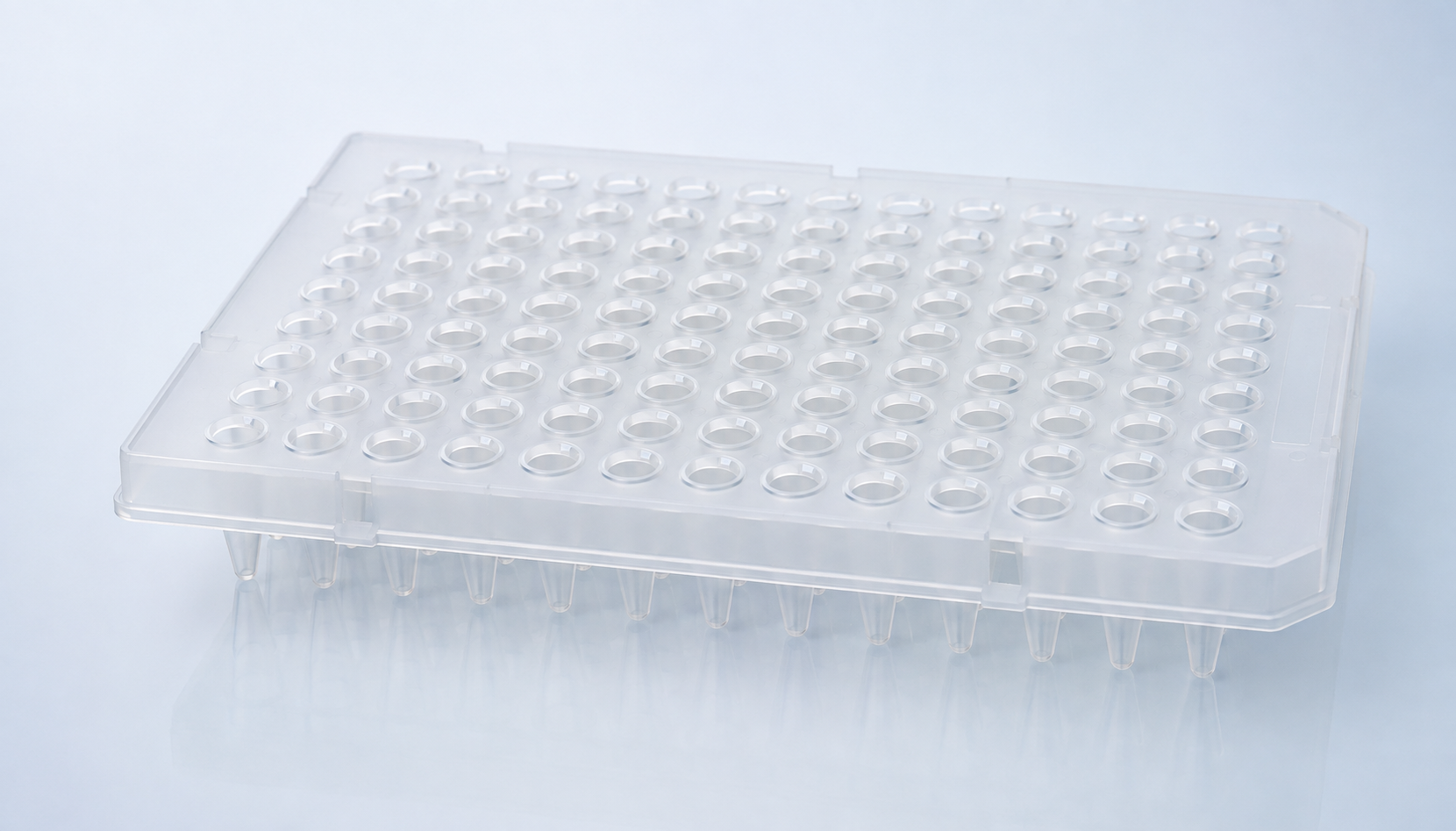
The 96-well plates are available in two profiles:
- 0.1 mL low-profile plates for fast thermocyclers and workflows using small reaction volumes;
- 0.2 mL regular-profile plates for compatible standard thermocyclers.
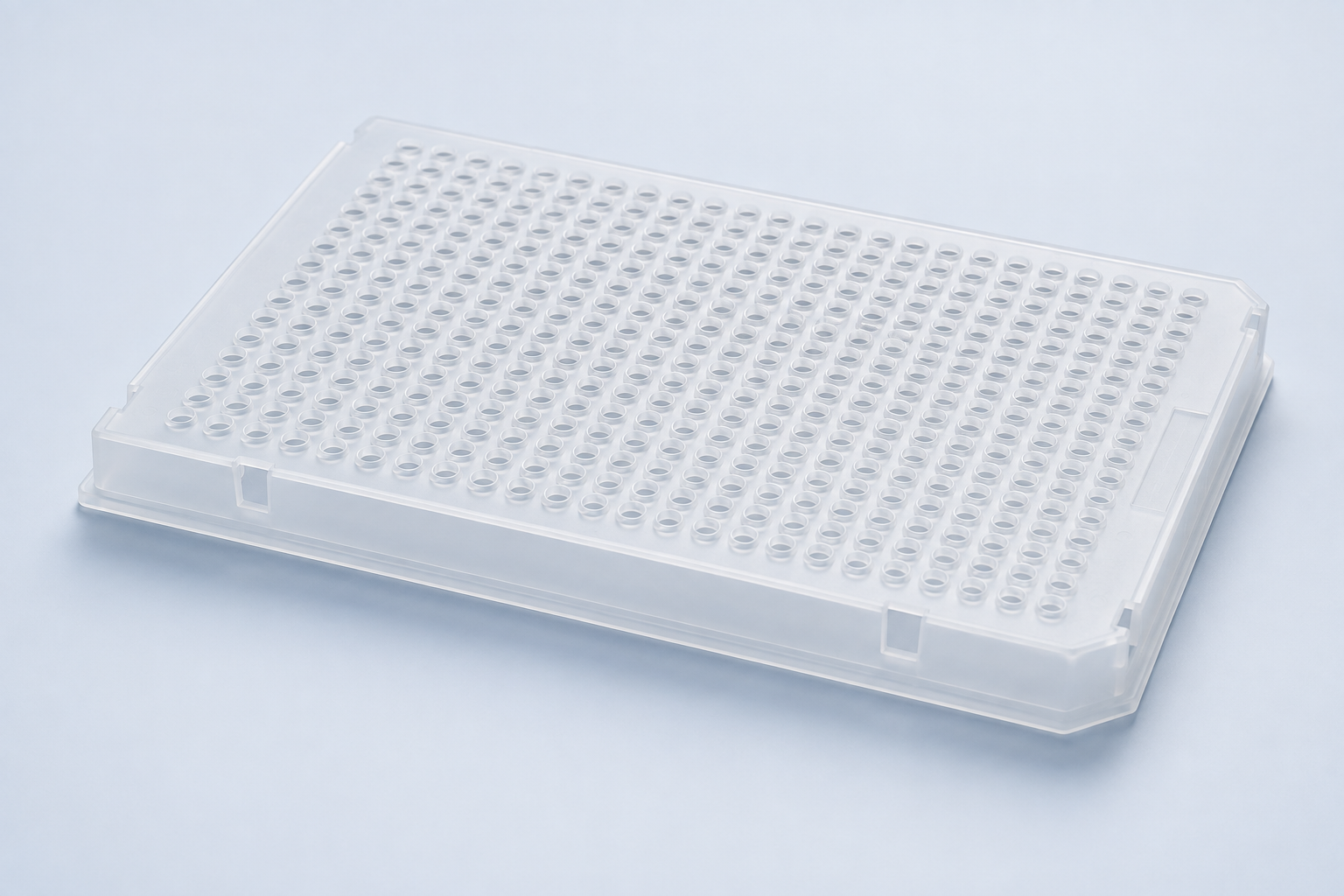
Fully skirted 384-well plates with a volume of 40 µL per well are available for higher-throughput applications. Their lower plate profile and smaller reaction volume make them suitable for high-throughput workflows.
Different skirt types
Depending on the volume, the PCR plates are available in non-skirted, semi-skirted, sub-semi-skirted and fully skirted versions. The skirt type affects mechanical support, handling and compatibility with thermocyclers and automated platforms.
As compatibility varies between instruments, the appropriate combination of volume, profile and skirt type should be confirmed for the relevant thermocycler before use.
Easy sample identification
The plates feature alphanumeric coding that allows individual wells to be located quickly. This supports organised sample tracking and helps prevent sample mix-ups during experiments.
The white PCR plates feature black printed alphanumeric coding for clear contrast and good readability.
Frosted and white plates
The frosted plates support a favourable signal-to-noise ratio during qPCR measurements. White plates improve the contrast and visibility of fluorescence signals, supporting the detection and analysis of qPCR reactions.
The appropriate colour depends on the detection system, measurement method and protocol requirements.
Raised well rims
Raised rims around the wells support even contact with the sealing membrane. This helps create a reliable seal, limit evaporation and preserve sample integrity throughout the thermal cycling process.
Standard sealing membrane
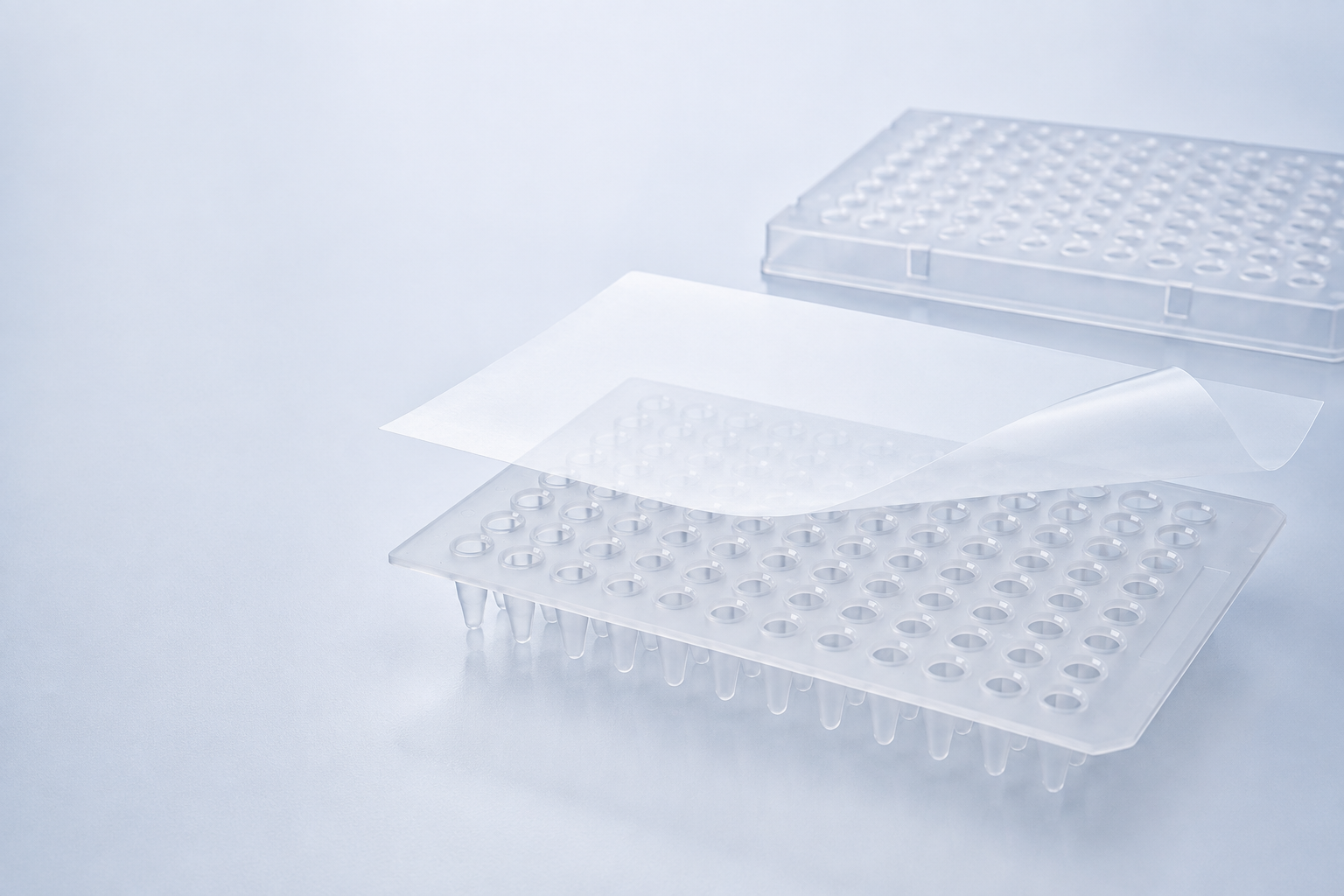
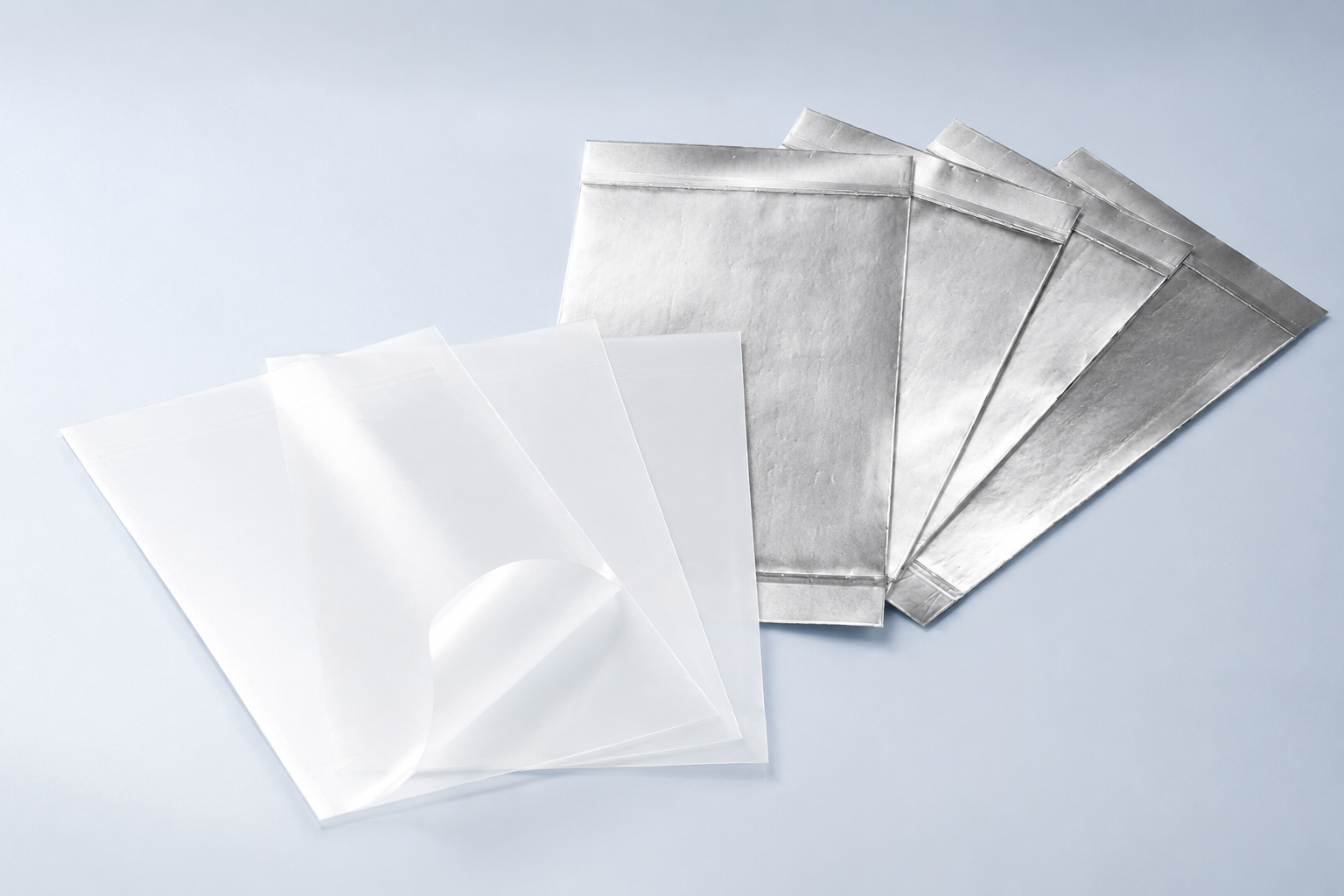
The standard sealing membrane is designed to seal 96-well plates during PCR workflows. Its strong adhesive supports reliable attachment to the plate. The membrane has an operating temperature range of -40 to 120 °C.
Optical sealing membranes
Two optical sealing membranes are available for real-time PCR and other qPCR workflows. The ultra-clear membranes provide consistent, high light transmission and support reliable optical detection.
Depending on the version, either a strong standard adhesive or a strong pressure-sensitive adhesive is used. The optical membranes have an operating temperature range of -40 to 120 °C.
Aluminium sealing membrane
The pierceable aluminium sealing membrane is suitable for PCR workflows and sample storage. Its strong adhesive supports reliable sealing, while the aluminium material can be pierced for subsequent sample processing. This version can be used at temperatures ranging from -80 to 120 °C.
Easy application and removal
The sealing membranes feature removable tabs at both ends. These support controlled positioning on the plate and make it easier to remove the membrane after use.
The membranes are supplied in small pack sizes. This limits the number of membranes handled at one time, helping reduce the risk of contamination when used by different laboratory personnel.
Limited evaporation and certified purity
An evaporation rate below 5% is specified for the sealing membranes. This helps preserve reaction volume during thermal cycling or storage and supports reproducible results.
Would you like to receive more information about this product, or request a quote? Klik hier!
Product information
| Size | See product table |
| Product code | See product table |
| Unit of Measure | See product table |